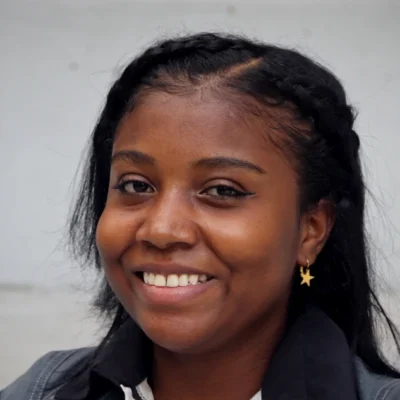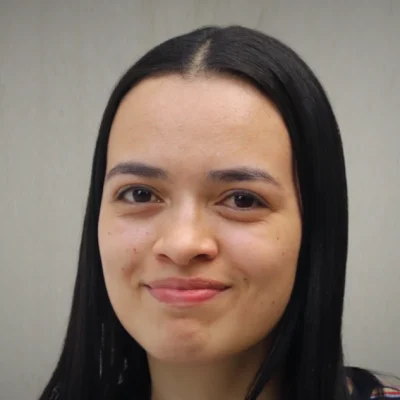


As part of our ongoing series introducing our beneficiaries, this new interview focuses on Leidy Chingal. From the Indigenous reserve of Gran Cumbal in southern Colombia to her current studies in sociology at the University of Antioquia, Leidy’s path shows how clear goals and steady effort can open opportunities even in challenging circumstances. Her experience offers a practical look at what it takes to pursue higher education away from home, the role of family and community, and how targeted support can make a real difference.
Who is Leidy Chingal?
I am a sociology student at the University of Antioquia. I grew up in the Indigenous reserve of Gran Cumbal, which, along with the reserves of Panan, Chiles, and Mayasquer, make up the four Indigenous reserves of Cumbal, Nariño, in southern Colombia. I consider myself a determined woman, someone who has always found a way to move forward no matter the challenges. I am optimistic. I do not give up easily and I always try to find solutions to problems, even when they seem to have no way out. I also like to be available for others. It makes me feel good to extend a helping hand to someone in need, just as I have received support at important moments in my life. Right now, I feel very happy because I am fulfilling a dream I have had since I was a child: to become a professional.
I am the youngest of five children my mother had. I have one brother and three sisters. My mother grew up in a home with very few resources, where education was not seen as a priority. For her family, it was more important that she contribute economically by working from a very young age. She only completed one year of primary school. From an early age, my grandparents would send her to take care of animals like sheep, cows, and pigs, because that was the only way she could help at home. My mother became a widow shortly after my second-to-last sister was born, and since then, she has had to raise all of her children on her own. In the beginning, she had support from my grandparents, who passed away when I was eight years old. I was born to a different father, who never had a stable relationship with my mother and was never actively involved in my life. Because of that, my mother has been the one who has always been there for us. The economic hardships our family faced meant that none of my siblings were able to finish high school. They all had to begin working in agriculture from a young age.
Why did you decide to pursue a university education?
I was a dedicated and responsible student from a very young age. I enjoyed learning and always worked hard to get good grades. However, when I finished primary school, my mother could not afford the expenses needed for me to continue my education. That was a difficult time in my life because I really wanted to keep going to school, but I was around eleven years old and already aware that things would not be easy. I decided to look for temporary jobs so I could pay for my own school supplies, uniforms, and books. I worked and studied at the same time.
Even though I had no role model in my family who had attended university, I started imagining myself in different careers when I was around thirteen. I dreamed of becoming a doctor, dentist, lawyer, or even a police officer, among other things. I would hear people talk about their relatives who were in college and I would ask myself why I could not do the same. Over time, I convinced myself that I had to try. I deserved a chance too. My mother, worried about our financial situation, warned me that she had no way of supporting me. She did not want me to get my hopes up and be heartbroken later. But I could not accept the idea of staying home or working in domestic jobs. I felt that was not my path. In the Indigenous reserve where I lived, there was a group that offered guidance to young people like me, and thanks to them, I got access to valuable information and support to begin the process of applying to university. I did everything on my own, guided by that group. I had a strong determination to study. Even if I had not gotten into university, I would have looked for a technical or vocational program that would allow me to move forward. What I knew for sure was that I did not want to follow the path my environment had laid out for me.
What was the biggest challenge you had to overcome to be at university today?
Without a doubt, the biggest challenge has been financial. Studying at the University of Antioquia meant moving to Medellin, a large city with a high cost of living for someone coming from a rural area. I had to cover transportation, food, housing, study materials, and many other expenses. When you do not have the resources, studying in a big city feels like an impossible dream. Fortunately, my mother, a brother-in-law, and my uncle Angel offered to lend me some money so I could begin my studies. That initial support allowed me to take the first step. Over time, I found other forms of assistance that helped me continue. The university offered me food support at first. Then I received a small government subsidy through a program called Jóvenes en Acción. Later, I obtained partial support from a fund for Indigenous communities. Even with these forms of aid, there were times when I did not have enough money to cover my basic needs. That financial uncertainty affected me emotionally because I felt like I might have to drop out of university at any moment. Still, every time I overcame a challenge, I reminded myself that it was worth it to keep going.
What has been your most important achievement so far at university?
My greatest achievement has been staying in university despite all the challenges. Not giving up, continuing with my studies, and not letting fear or uncertainty stop me. Today, I am proud of all the barriers I have been able to overcome. I also feel that I am an example to my eleven nieces and nephews. Several of them look up to me as an inspiration, and that gives me a lot of strength to keep going. Knowing that my efforts go beyond just benefiting me, that they can change the lives of others in my family, makes me feel like I am building something meaningful not just for myself, but for all of us.
How has the support from impactU influenced your university experience?
The support from the impactU Foundation has been a great blessing in my life. Since I received the scholarship, I have been able to focus much more on my studies because I no longer carry the constant worry about how I am going to pay for my expenses. Before, I had to work at small street vending stands on campus, where they only paid me 2,500 pesos an hour. It was also common for me to borrow money just to cover urgent needs. Now, thanks to the foundation, I feel greater peace of mind and a renewed hope that I can achieve my goals. I feel more ambitious, stronger, and more motivated to keep going. It has also changed how I view generosity. It is inspiring to see people who do not even know me personally be willing to support me so I can continue my education. It makes me want to become one of those people in the future. I feel that someday I will be able to give back what I have received, to walk alongside someone else on their journey, and to return a bit of what has been given to me.
How do you see yourself in the future?
I have two possible paths in mind. In one, I would stay in Medellin, start working in a public or private institution, and then pursue a postgraduate degree. In the other, I would return to Cumbal, the place where I grew up, to be closer to my family, especially my mother, and to contribute to the development of my community. In that scenario, I imagine myself working on social or institutional projects in my municipality or the department. I would like to use my professional training to help improve the well-being of the people of Cumbal. I believe my final decision will also depend on my mother’s health. If she needs me to be near her, my priority will be to care for her.
To finish, tell us about Cumbal, Nariño. What do you miss? What should we know?
Cumbal is a municipality located in the southernmost part of Colombia. Most of its residents belong to Indigenous communities that live in one of the four officially recognized reserves in the area. The local economy is centered on agriculture and livestock. It is a mountainous region with spectacular natural beauty. There are many nature reserves, high-altitude wetlands known as paramos, and lagoons. The main attractions are the Cumbal and Chiles volcanoes. Both peaks are about four thousand seven hundred meters above sea level. They can be reached on a one-day hike, and sometimes they even get snow. Another beautiful natural destination is La Bolsa Lagoon, located west of the town center.
As for food, the traditional dish is cuy with potatoes and aji. Cuy is a small Andean rodent that is roasted over charcoal and has a very distinct flavor. Toasted fava beans are also common. Another local favorite is fritada, which is made with fried pork belly, pork ribs, cooked corn, toasted corn, and spicy sauce. Barley soup and mote de trigo, a wheat-based soup, are very popular as well. There are many dishes that use quinoa, a traditional and highly nutritious grain. People also eat ocas and ulluco, which are native root vegetables similar to potatoes and usually eaten boiled. Cumbal is especially rich in local varieties of potatoes that are hard to find in large cities. I know between ten and twenty types of potatoes that I have never seen in Medellin, but that are still cultivated in my hometown. That is something I really miss, not just because of the taste but because of what those foods represent: a deep connection to my land and to the identity of my community.
Would you like to meet other beneficiaries?
We invite you to meet Marco.
Join us!
Leidy’s journey shows what determination and support can achieve. You too can help more students like her reach their university dreams. Join as a volunteer or make a donation to provide the resources and guidance that make these opportunities possible. Every contribution brings hope, opens doors, and transforms lives. Support us today and help make more stories like Leidy’s come true. Support us and let us change lives together.
Want to learn more about impactU?
Let us tell you more about us.